How Your Psoas Muscle Contributes to Chronic Stress, Nervous System Dysregulation, and Pain

Have you ever wondered why chronic stress, persistent low back pain, tight hips, or a sense of feeling “stuck in survival mode” just won’t go away—no matter how much talk therapy, journaling, or self-care you do?
One often-overlooked piece of the puzzle is the psoas muscle (pronounced so-azz), a deep core muscle that plays a key role in your body’s stress response and overall nervous system regulation.
In this blog post, you will learn:
What the psoas muscle is, where it’s located in the body, and how it operates under chronic stress and trauma
Why chronic stress and/or unresolved trauma in the body can lead to persistent psoas tension
How psoas tension can show up as pain and nervous system dysregulation
Details about my upcoming mini course Practical Peace: 5-Day Nervous System Reset, launching on January 18th!
What Is the Psoas Muscle?
The psoas muscle, also commonly called the psoas major, is a deep internal core muscle that connects your lower spine to your legs. It’s one of the body’s primary hip flexors and sits close to vital organs like your kidneys, large intestine, and reproductive organs, large blood vessels, and important nerves like the lumbar nerve complex. The psoas’ central location makes it a key player in both movement and the stress response.
The bundle of nerves called the lumbar sympathetic trunk run along the psoas muscle. This bundle of nerves is part of your sympathetic nervous system, which governs your fight-or-flight stress response, as well as your capacities for excitement, movement, and play.
This connects the psoas region directly to stress responses and digestive regulation, and is key reason why the psoas is often discussed in relation to fight-flight-freeze activation.
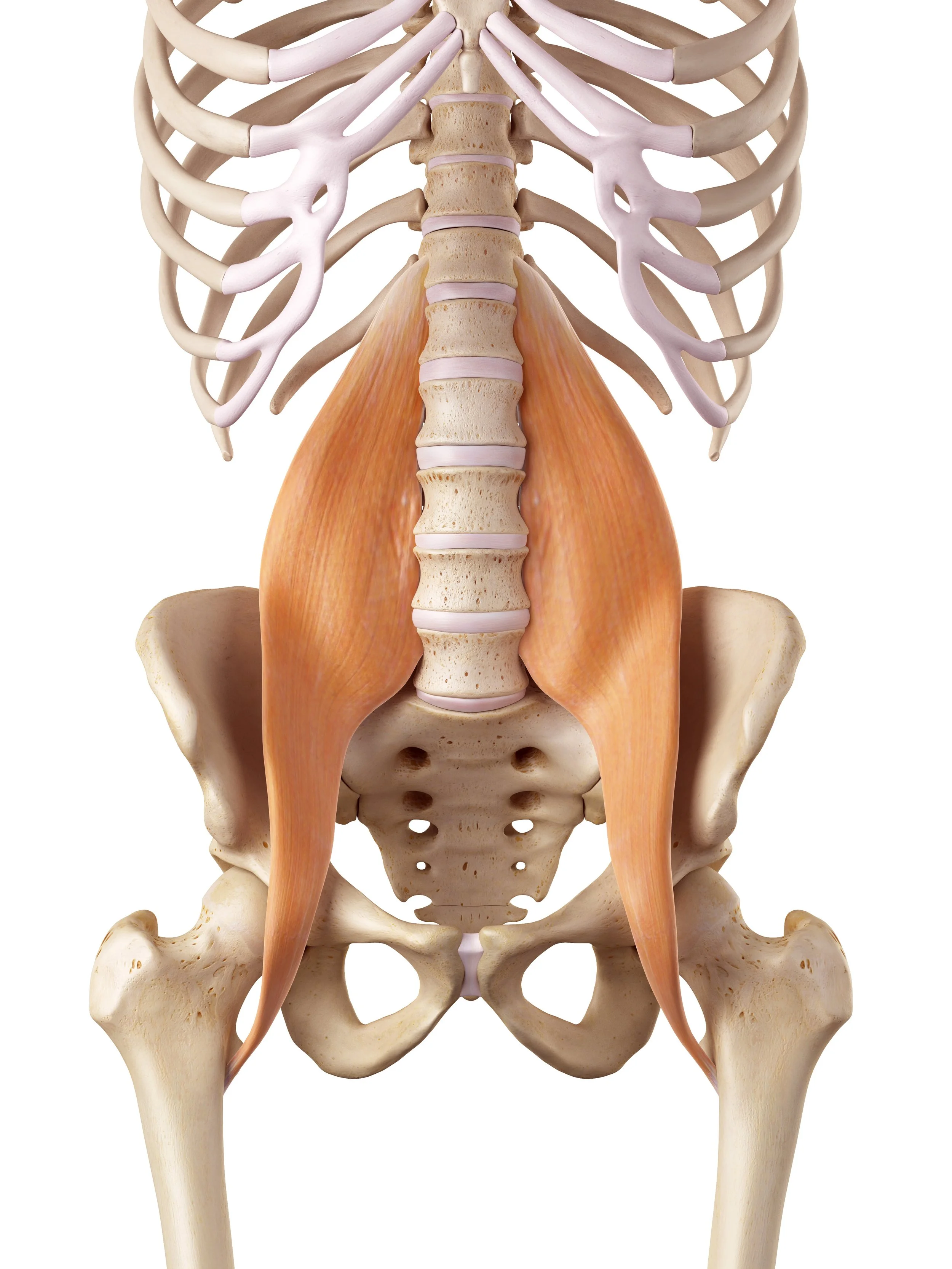
The above salmon-light orange colored muscle is your psoas muscle, also called your psoas major muscle.
The Psoas and the Stress Response
When your nervous system perceives a threat—even subconsciously—it activates the sympathetic nervous system (your “fight-flight-freeze” response). This is a biologically wired survival response during which your body braces for impact.
In this response:
Your psoas contracts
Your breath becomes shallow
Your heart rate increases
You become more vigilant and alert
Your body prepares to fight, flee away from, our freeze in the face of a perceived threat
Because the psoas is involved in both stabilizing and mobilizing the body, it plays a key role in this sympathetic response. It’s one of the muscles that helps the body prepare for movement—even if you never actually run or fight.
If you want to go deeper into the psoas muscle and its influence of the body, mind, and emotions, you can check out Liz Koch and her groundbreaking book The Psoas Book.
Important side note: The sympathetic nervous system and stress are not bad things. We need to experience a certain amount of stress every day to be well. Plus, the sympathetic nervous system governs our abilities to be playful, excited, and to have the willpower to move through life. So, we love her! We just don’t want her over-functioning.
Chronic Stress, Trauma, and Psoas Tension
Stress that is ongoing (chronic), unresolved, and/or rooted in past trauma can lead to a habitual tightening of the psoas muscle. The body learns a neuro-muscular pattern of holding in this muscle as a protective response.
This is important because:
The psoas doesn’t easily release tension on its own
Habitual tightening can persist even after the threat has passed
Holding patterns become “normalized” until the body is invited to release them (this is where somatic exercises come in!)
Chronic tension of the psoas is commonly associated with:
Lower back pain
Tight hips
Chronic fatigue
Emotional stuckness
Difficulty relaxing, even when it is safe to do so
Feeling “wired but tired” all the time
If you have been experiencing all of the above for 3+months without relief despite “doing all the things,” you might have a contracted psoas muscle—and there is great hope for you to heal!

Why and How Somatic Exercises Can Help
When the psoas muscle is habitually tight, the body stays in a pattern of reactive control. This keeps the nervous system in a higher alert state, which can make it hard to relax, sleep, digest well, and regulate your emotions.
Somatic exercises can support you to:
Regulate your nervous system
Increase body awareness
Decrease stress and anxiety
Support you to relax more, sleep better, and digest better
Decrease emotional reactivity and increase your ability to naturally regulate your emotions
These exercises are gentle, mindful movements and awareness practices that can help your nervous system to learn safety again.
Introducing: Practical Peace – A 5-Day Nervous System Reset (Launching January 18)
If you resonated with this post, I’m SO EXCITED to share something special with you:
Practical Peace: A 5-Day Nervous System Reset
A short, accessible course designed to help you:
Learn simple, powerful somatic exercises for nervous system regulation
Ease stress and mental overwhelm
Activate your body’s natural relaxation response
Build a daily somatic practice you can continue beyond 5 days
In just 10 minutes a day, you’ll:
Learn a practical intention-setting method
Engage in four somatic exercise practices that can help you regulate in real time
Follow a gentle roadmap for releasing stored tension
Awaken a deeper sense of embodiment and ease
This course is ideal for:
Beginners to somatic practice
People who feel “stuck” despite insight
Anyone seeking practical peace from chronic stress and nervous system dysregulation
I will email you as soon as it’s live!
Final Reflection
The psoas muscle is one key way your body stores and expresses stress and trauma—but it’s not something you have to “fight” or “fix.” With gentle education and somatic practices, you can support your nervous system to unwind habitual tension, invite calm, and live with more ease.
If you’re ready for deeper support—whether through somatic coaching or therapy—I’d love to speak with you.
Are you a resident of Connecticut or New York? Explore therapy, centered on offering you truly holistic care.
For all other individuals worldwide, check out my somatic coaching offering.
With care,
Heather